

Bali remains one of Indonesia’s most popular holiday destinations throughout the year. From beaches and beach clubs to temples, cafés, rice fields, cultural attractions,and wellness experiences, the island continues to offer plenty for travelers even when the weather becomes wetter.
As the Bali rainy season approaches, travelers may notice changes in daily weather patterns and outdoor conditions. Rain can sometimes arrive suddenly, roads may become busier or wetter, and some outdoor activities may need more flexibility. At the same time, the rainy season does not mean that Bali stops being a good destination to visit.
Popular areas across the island continue to welcome visitors, while travelers can make a few simple adjustments to enjoy their holiday more comfortably.
Bali generally experiences a wetter period toward the end and beginning of the year, although the timing and intensity of rainfall can vary from year to year.
Rainfall is often not constant throughout the entire day. A morning can be sunny, followed by heavy rain in the afternoon, or a short shower can pass before the weather becomes clear again. Because of this, travelers should avoid planning every activity too tightly around a fixed weather forecast.
The rainy season can also create different conditions across Bali. Coastal areas, mountain regions, and inland destinations may experience different weather at the same time.
For travelers, the most useful approach is to stay flexible and check local weather conditions before heading out.

Bali has many different tourism areas, and each offers a different experience during the wetter months. Popular destinations continue to operate, but travelers may need to pay more attention to weather, traffic, and outdoor conditions.
Canggu and nearby Pererenan remain popular for travelers looking for cafés, restaurants, beaches, wellness activities, and a relaxed lifestyle.
During rainy periods, travelers can balance outdoor activities with indoor options. Instead of spending the entire day at the beach, visitors can explore cafés, restaurants, spas, fitness studios, shops, or simply enjoy a slower day at their accommodation.
For travelers staying around Canggu, Tumbak Bayuh and the surrounding Pererenan area can also provide a quieter base while remaining within reach of the more active parts of Canggu.
Seminyak and Kuta offer many activities that are not completely dependent on sunshine.
Restaurants, shopping areas, cafés, spas, and entertainment venues provide alternatives when rain affects beach plans. Travelers can also use rainy periods as an opportunity to explore Bali at a slower pace rather than trying to fit too many outdoor activities into one day.
Ubud is another popular destination during the rainy season. The area is known for art, culture, restaurants, wellness experiences, and its surrounding countryside.
Rain can sometimes change outdoor plans, but Ubud has plenty of indoor experiences to enjoy. Art galleries, museums, cafés, restaurants, yoga studios, and cultural activities can become useful alternatives when the weather is wet.
Uluwatu is famous for its cliffs, beaches, temples, and sunset views. These attractions are strongly connected to outdoor conditions, so travelers should pay attention to the weather before planning a full day in the area.
A flexible itinerary can help. If the morning looks clear, travelers can prioritize outdoor attractions and move indoor activities to later in the day if rain arrives.

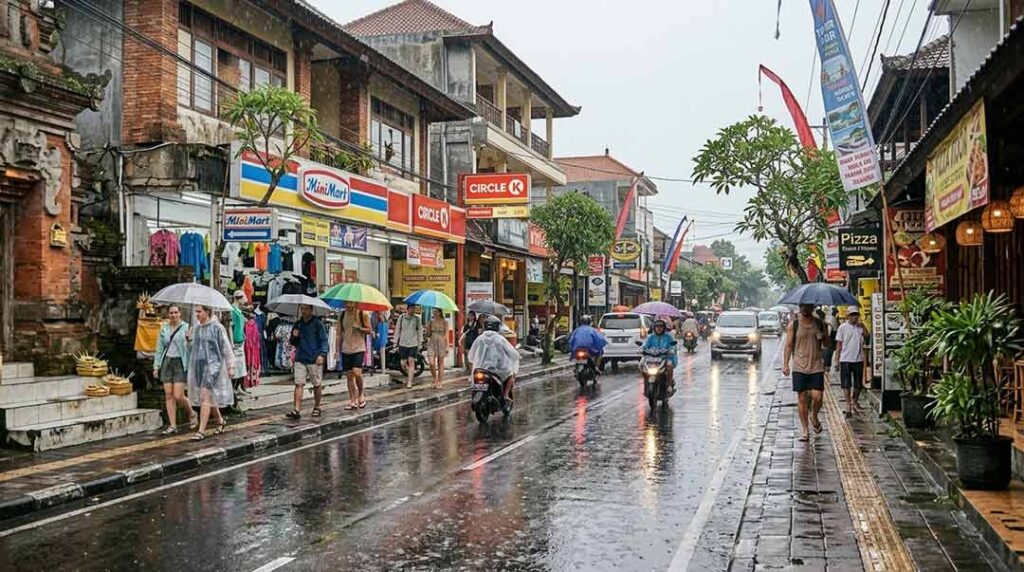





Traveling during the Bali rainy season does not require major changes to your holiday. A few practical preparations can make a noticeable difference.
A compact umbrella or lightweight rain jacket is useful when exploring Bali. Even if the morning starts with bright sunshine, weather can change quickly.
Keeping rain protection in your day bag means you do not always have to return to your accommodation when a shower begins.
Wet roads and heavier traffic can make some journeys take longer than expected.
This is especially important when traveling between busy tourism areas such as Canggu, Seminyak, Kuta, and other popular parts of Bali. If you have an airport transfer, tour booking, or restaurant reservation, leaving earlier can reduce unnecessary stress.
Beach days, hiking, sightseeing, and other outdoor activities are easier when the weather is dry.
Instead of creating a strict itinerary for every hour, consider having a few alternative activities ready. If rain affects your original plan, you can switch to a café, restaurant, spa, shopping area, cultural attraction, or another indoor activity.
Rain can be inconvenient when traveling with phones, cameras, documents, and other electronics.
A waterproof pouch or simple dry bag can help protect important belongings when you are walking outside or traveling by motorcycle or car.
Heavy rain can affect certain outdoor attractions, especially areas involving rivers, waterfalls, trekking routes, or slippery paths.
Always check current local conditions and follow instructions from attraction staff. If conditions are unsuitable, changing your plan is usually better than taking unnecessary risks.

One advantage of Bali is the wide variety of experiences available beyond beaches.
A rainy afternoon can be a good opportunity to discover another side of the island.
Enjoy Bali’s café culture.
Cafés are found throughout popular tourism areas, making them an easy option for a relaxed afternoon. You can use the time to enjoy local coffee, brunch, dessert, or simply catch up on work or travel plans.
Try a spa or wellness experience.
A rainy day can be a perfect excuse to slow down. Bali offers many spas, massage treatments, wellness centers, and yoga experiences.
Explore art and culture.
Museums, galleries, temples, cultural performances, and traditional activities can add variety to a Bali itinerary, particularly when spending several days on the island.
Enjoy a longer meal.
Instead of rushing between attractions, use rainy weather as an opportunity to enjoy lunch or dinner at a local restaurant.
Spend time at your accommodation.
Not every holiday day needs to be busy. A comfortable room, swimming pool, good Wi-Fi, and a quiet environment can make a rainy afternoon an enjoyable part of the trip.
Yes. The rainy season can change the rhythm of a Bali holiday, but it does not mean visitors cannot enjoy the island.
The key is to understand that Bali weather can be unpredictable. Some days may bring frequent rain, while others can still offer long periods of sunshine. Travelers who plan with flexibility are more likely to enjoy their trip without becoming frustrated by changes in weather.
The rainy season can also encourage a different style of travel. Instead of rushing from one attraction to another, visitors can spend more time enjoying Bali’s cafés, restaurants, wellness experiences, culture, and local lifestyle.
For travelers who prefer a quieter holiday, this flexible approach can make Bali feel more relaxed.

Preparing for the rainy season is not about avoiding Bali. It is about traveling with realistic expectations.
Bring suitable rain protection, check the weather before outdoor activities, allow extra time for transportation, and keep alternative activities available. Most importantly, do not let a few hours of rain determine the entire holiday.
Bali continues to offer beaches, food, culture, wellness, entertainment, and local experiences throughout the year. With a flexible itinerary, the rainy season can simply become another part of experiencing the island.
If you are planning to explore Canggu and Pererenan, staying slightly away from the busiest streets can also give you a more peaceful base while keeping popular cafés, restaurants, beaches, and other attractions within reach.
© Copyright Tunjung Boutique Resort