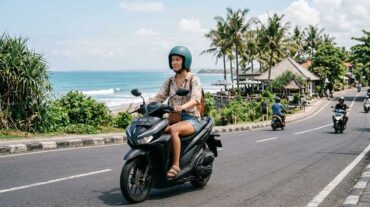

Bali is famous for its beautiful beaches, tropical cafes, traditional villages, and vibrant lifestyle. For many visitors, renting a scooter seems like the easiest way to explore the island. However, not everyone feels comfortable riding a motorbike, especially when dealing with unfamiliar roads, heavy traffic, or different driving habits.
The good news is that Bali without a scooter is still possible, particularly if you choose your accommodation carefully and plan your journeys in advance. Ride-hailing apps, taxis, private drivers, and walking can help you explore many popular destinations without having to ride yourself.
However, the experience depends on where you stay and which places you want to visit. Some neighborhoods are convenient for short trips, while more distant attractions may require additional planning and a larger transport budget.
Long Stay in Bali has become one of the most exciting travel trends in recent years. As more travelers look for flexible lifestyles and remote work options, Bali continues to attract visitors who choose to stay for months instead of days. Among the island’s many destinations, Canggu and Uluwatu stand out as the two most popular areas for long-term visitors. Each offers a distinct vibe, lifestyle, and setting that make them irresistible for those seeking the perfect Bali experience.
Over the past few years, these two locations have evolved into thriving long-stay hubs. Canggu, with its trendy cafés, coworking spaces, and surf beaches, draws a younger crowd and digital nomads. Meanwhile, Uluwatu, with its stunning cliffs and relaxed energy, appeals to those who prefer a quieter, nature-filled escape. Both offer a mix of modern comfort, scenic beauty, and cultural depth that make long stays truly memorable.
Yes, you can explore Bali without renting a scooter, but it helps to have realistic expectations. Popular tourist areas such as Canggu, Seminyak, Kuta, and parts of Ubud offer several transport options, although convenience varies between neighborhoods.
For short journeys, you may be able to walk to restaurants, cafes, shops, or nearby attractions. For longer trips, ride-hailing services and taxis can take you between destinations without requiring you to navigate Bali’s roads yourself.
The main challenge is not the complete absence of transport. Instead, it is the time and cost involved in reaching places that are far apart, particularly during busy periods.
Traveling without a scooter is generally easier when you:
Stay near restaurants, shops, and places you plan to visit regularly.
Use ride-hailing apps for convenient point-to-point journeys.
Group nearby attractions together instead of crossing the island several times a day.
Allow extra travel time during peak traffic hours.
Arrange a driver for longer day trips or destinations that are difficult to reach.
If your holiday focuses on one main area rather than visiting several distant destinations every day, you may find that a scooter is unnecessary.
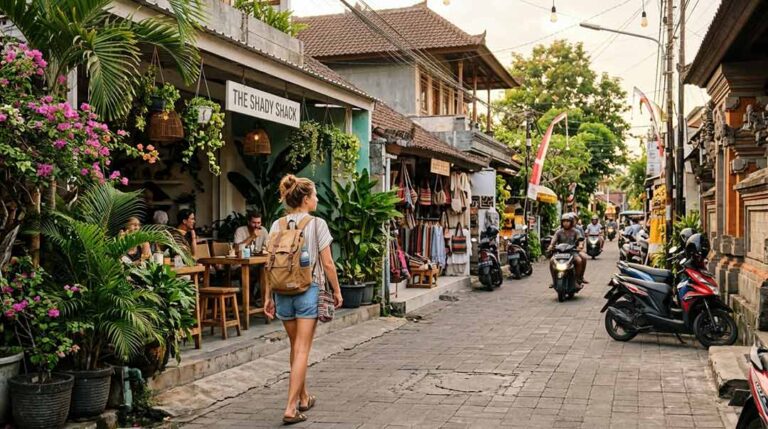
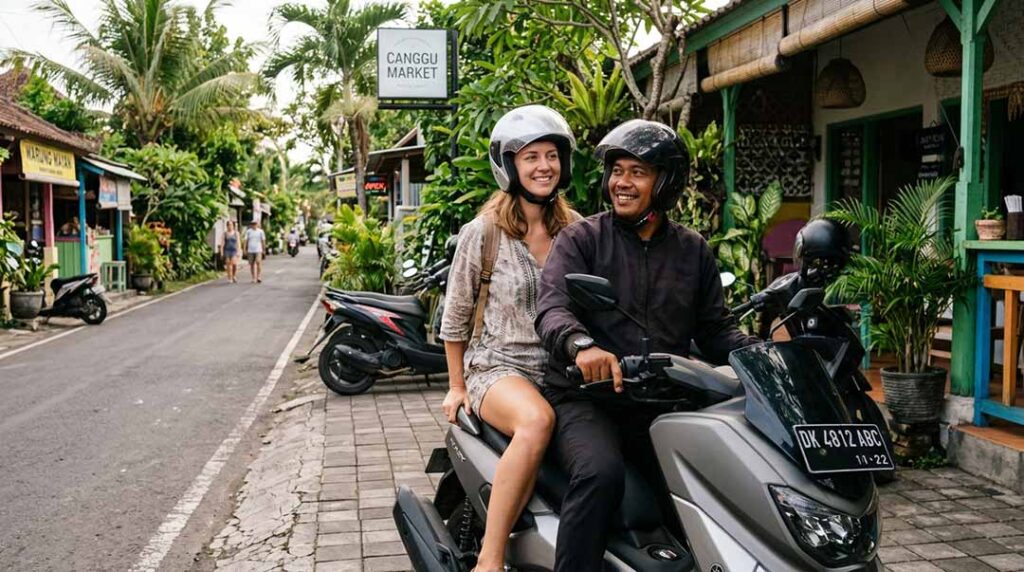
You do not need to rely on a single transport method throughout your holiday. Combining walking, ride-hailing services, taxis, and private drivers can make exploring Bali more comfortable and flexible.
Grab and Gojek are among the most practical options for getting around popular areas of Bali. Both offer app-based transport services, including cars, while motorcycle rides are also available for travelers who are comfortable being passengers on a motorbike.
Their main advantage is convenience. You can enter your destination, check the estimated fare, and review your ride details before confirming the booking. This is particularly useful when traveling to restaurants, beaches, shopping areas, and nearby attractions.
However, availability and pickup arrangements can vary by location. Some tourist spots have restrictions or designated pickup points, and drivers may not always be able to collect you directly from a venue entrance.
Best for: Short journeys, restaurant visits, beach trips, and everyday transportation in areas with good service coverage.
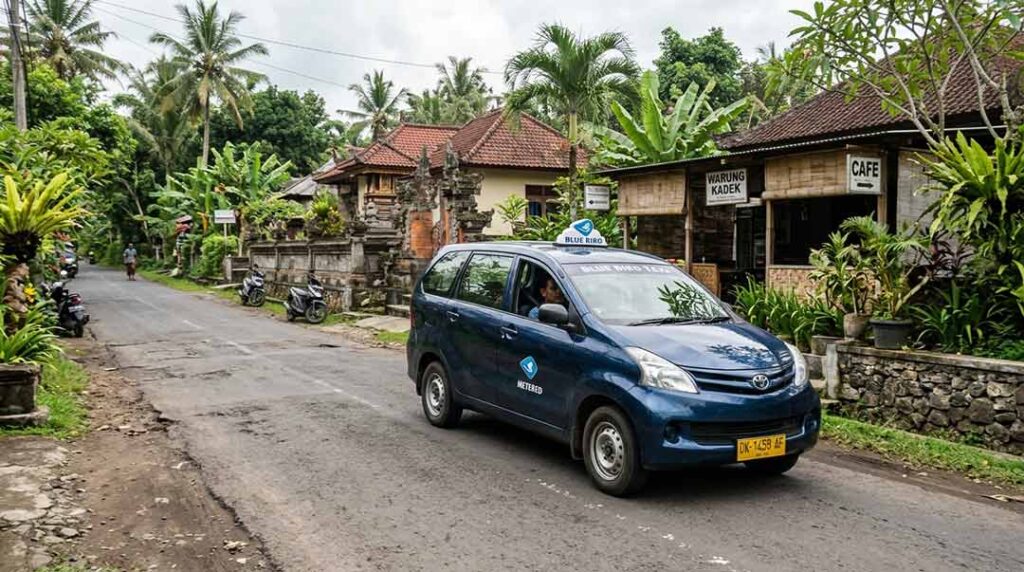
Traditional taxis are another option for visitors who prefer not to use a motorcycle or depend entirely on mobile apps. Metered taxis can be useful for trips around established tourist districts, while app-based taxi bookings offer another way to arrange a ride.
When taking a taxi from the street, check that it is a legitimate operator and confirm that the meter will be used or agree on the fare before departing. You can also compare the available options in an app before deciding which service to use.
Best for: Short trips, evenings out, airport transfers, and situations where app-based pickups are inconvenient.
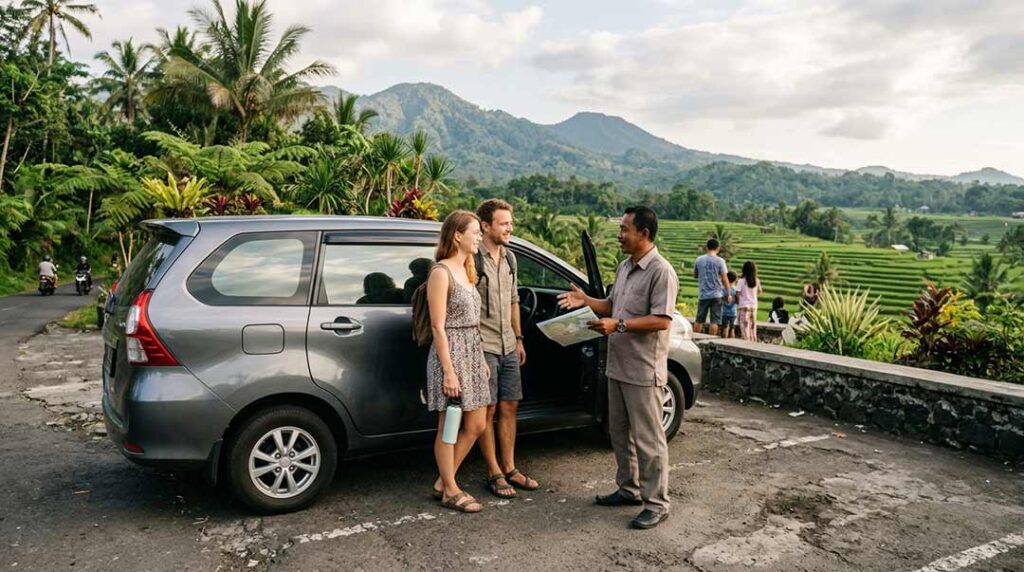
If you want to explore several destinations in one day, hiring a private driver can be a convenient alternative. You can arrange a route that includes temples, scenic viewpoints, restaurants, traditional villages, or beaches without having to book separate rides for every stop.
A private driver is especially useful for couples, families, and small groups. Although the total cost is higher than a single ride-hailing journey, sharing the cost between several passengers can make the arrangement more reasonable.
Before booking, clarify the duration, itinerary, fuel, parking fees, and any additional charges. For popular destinations or busy travel periods, arranging the driver in advance can also make planning easier.
Best for: Full-day sightseeing, long-distance trips, multiple destinations, and travelers who value convenience.
Walking is often overlooked, but it can be one of the easiest ways to explore Bali when you choose the right accommodation.
You may be able to reach nearby cafes, local restaurants, convenience stores, and small shops without arranging transport. Walking also gives you more opportunities to discover local streets and everyday life at your own pace.
However, Bali is not equally walkable everywhere. Some roads have narrow or missing sidewalks, uneven surfaces, limited lighting, or heavy traffic. Check the actual walking route before assuming a destination is close enough to reach on foot.
Best for: Exploring your immediate neighborhood, visiting nearby businesses, and enjoying a slower travel experience.
Your transportation budget depends on how often you travel, how far you go, the time of day, and the number of people sharing the ride.
Ride-hailing apps can be economical for short journeys, while private drivers may be more suitable for full-day excursions. Fares can change with demand and availability, so check the current price before booking.
The table below provides a practical comparison of transport methods rather than fixed prices.
| Transport Option | Typical Cost Structure | Best Use |
|---|---|---|
| Grab or Gojek Car | Pay per journey | Short trips and everyday travel |
| Motorcycle Taxi Passenger Ride | Pay per journey | Short trips for travelers comfortable riding as passengers |
| Metered Taxi | Based on the meter | Local journeys and convenient pickups |
| Private Driver | Usually agreed per trip or day | Sightseeing and multiple stops |
| Walking | No transport fare | Nearby cafes, shops, and attractions |
As a general planning estimate, short app-based car journeys in southern Bali may cost around IDR 25,000–100,000, while full-day private drivers may cost approximately IDR 500,000–900,000 or more. These figures are indicative estimates rather than guaranteed prices. Actual fares depend on the route, vehicle, demand, and booking conditions.
If you are traveling without a scooter, a few simple habits can help you avoid spending more than necessary.
Stay longer in one area. Exploring a single neighborhood in depth can reduce the number of rides you need each day.
Group nearby destinations. Visit beaches, cafes, and attractions in the same area instead of crossing Bali repeatedly.
Compare ride options. Check Grab and Gojek when available, and compare the fare with a legitimate taxi or prearranged driver.
Share a private driver. Couples and groups can split the cost of a sightseeing trip.
Plan around traffic. A short distance can take much longer than expected during peak periods, so avoid scheduling too many activities in one day.
The goal is not necessarily to find the cheapest transport for every journey. It is to balance convenience, comfort, and total holiday expenses.

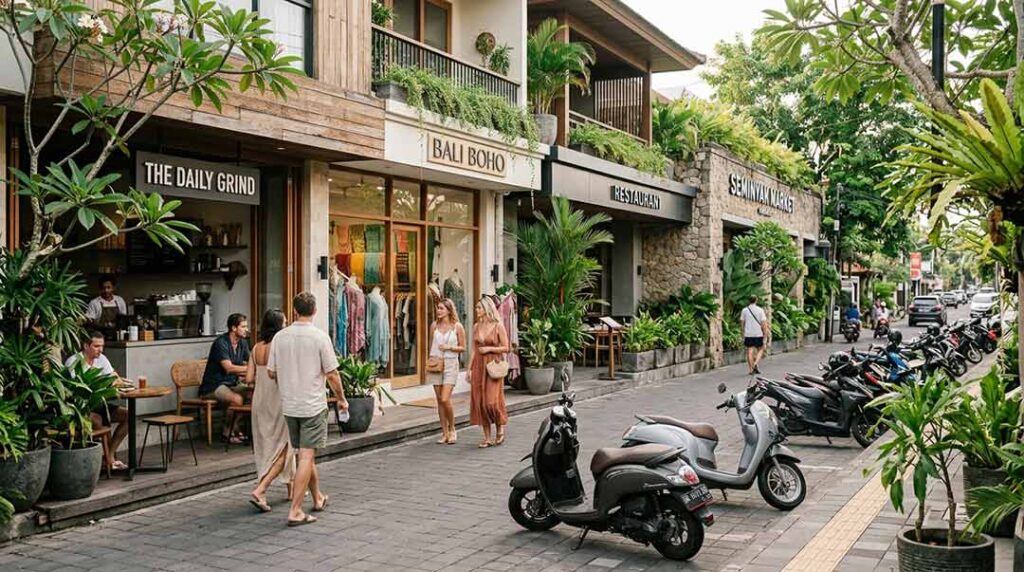
Your choice of accommodation can have a greater effect on your travel experience than the transport method itself. Staying close to the activities you enjoy can reduce the need for frequent rides and make your holiday feel less rushed.
Sanur is worth considering if you enjoy a slower pace, a coastal atmosphere, and opportunities for walking. Parts of the area have a beachfront promenade, with cafes and restaurants that can be explored on foot.
It can be a good option for travelers who want to spend more time close to their accommodation rather than visiting several distant destinations every day. For longer excursions, you can still arrange a car or private driver.
Seminyak offers a mix of restaurants, boutiques, cafes, and beach venues. Depending on where you stay, you may be able to combine several activities within the same neighborhood.
It is a practical choice for visitors who enjoy dining out and exploring commercial areas. However, distances between different parts of Seminyak can still be significant, and busy roads may make walking less comfortable in some locations.
Canggu and Pererenan appeal to travelers who enjoy cafes, restaurants, beach sunsets, and Bali’s contemporary lifestyle. Staying near the places you plan to visit can make it easier to enjoy the area without renting a scooter.
However, these neighborhoods are spread out, and not every accommodation is within walking distance of the beach or main dining areas. Traffic can also affect journey times, particularly during busy hours.
If you prefer a quieter place to stay, areas around Pererenan and Tumbak Bayuh may be worth considering. The important factor is the exact location of your accommodation and how easily you can arrange rides to the places on your itinerary.
For a closer look at the differences, read our guides to The New Canggu Lifestyle: Work, Wellness, Explore, and Live Fully and Quiet Stay in Canggu: Discover Tumbak Bayuh.
Ubud is a popular choice for travelers interested in art, culture, traditional markets, wellness activities, and inland scenery. Parts of central Ubud can be explored on foot, especially when you stay near the places you want to visit.
However, attractions outside the center may require a driver or other transport arrangements. If you plan to visit waterfalls, rice terraces, temples, or villages around Ubud, consider arranging transport for the day rather than relying entirely on walking.
Ultimately, no single area is perfect for everyone. Choose your base according to your interests, budget, and willingness to travel between destinations.
Although traveling without a scooter is possible, it is important to understand the challenges before planning your holiday.
Traffic is one of the biggest factors affecting travel around southern Bali. Even when two places look close on a map, the journey can take longer than expected, especially during busy hours.
Instead of planning your day based only on distance, allow extra time for transportation. Visiting several attractions in the same area is often more practical than traveling across the island for every activity.
Ride-hailing services are useful in many popular areas, but availability can be less convenient in remote villages or around certain attractions. Pickup restrictions may also apply at some locations.
Before visiting a destination, check whether you can arrange a return journey. This is particularly important if you are planning to stay for sunset, visit a less-developed area, or travel after dinner.
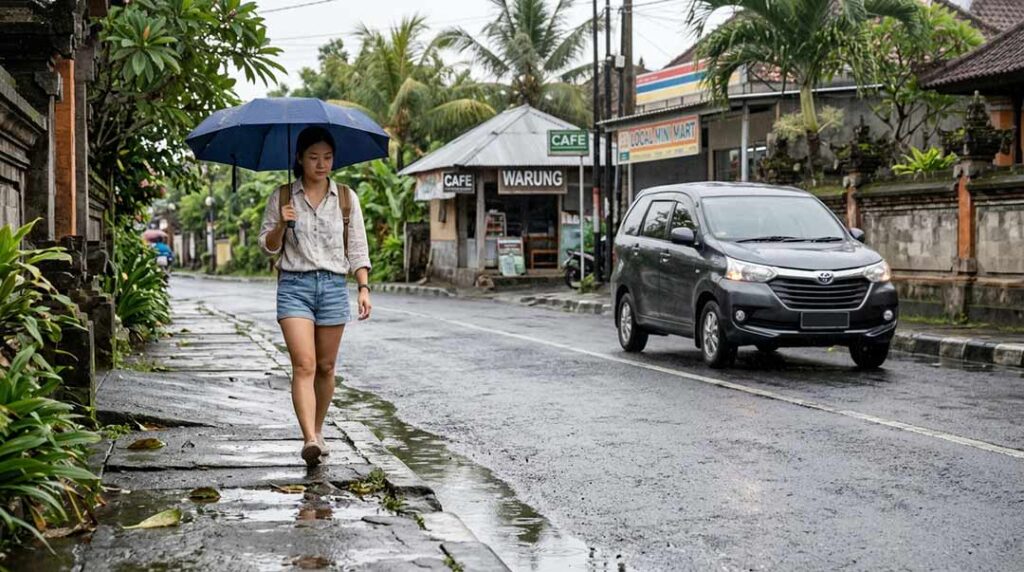
Bali’s tropical weather can change quickly. Heavy rain may make walking uncomfortable, while wet roads and reduced visibility can affect journey times.
During the rainy season, consider carrying a compact umbrella, checking the weather forecast, and allowing additional time for transportation. A car may be more comfortable than walking between destinations when the weather is poor.
Having your own vehicle can make it easier to change plans at the last minute. Without a scooter, you may need to check ride availability, wait for a driver, or arrange transport in advance.
You can still enjoy spontaneous experiences, but a flexible itinerary and a little preparation will make your journey smoother.

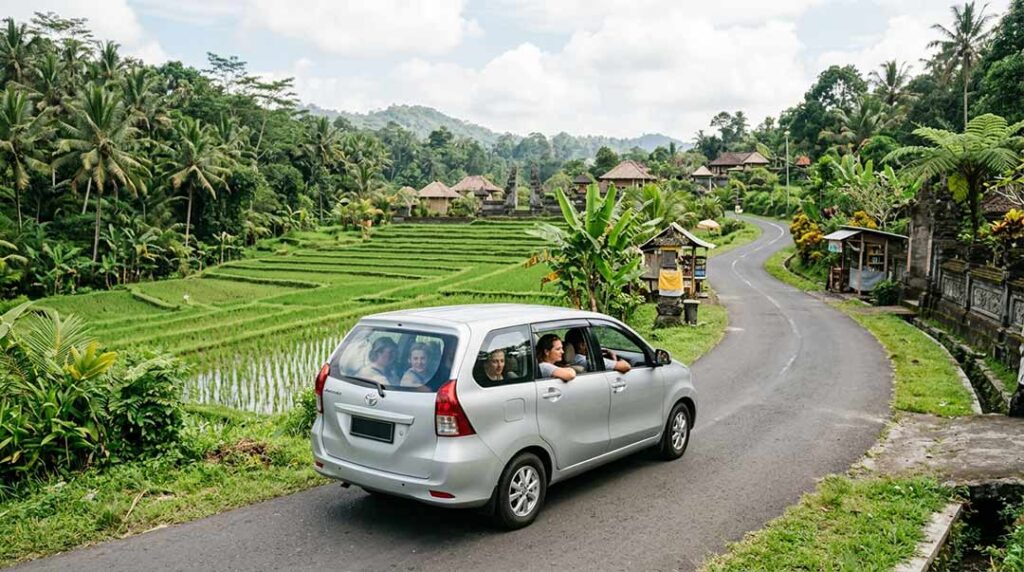

A comfortable trip starts with a few simple decisions. You do not need to organize every hour in advance, but having a basic transportation plan can help you avoid unnecessary stress.
Here are some useful tips for your trip:
Install transportation apps before arriving. Set up Grab and Gojek where available, and make sure you have a working internet connection.
Check your accommodation’s location. Look at walking routes to nearby restaurants, shops, and attractions instead of relying only on straight-line distances.
Keep your plans flexible. Allow extra time for traffic, weather changes, and pickup delays.
Arrange long-distance trips ahead of time. A private driver may be more practical for a full day of sightseeing or visiting several attractions outside your base.
Confirm the pickup point. Some venues have specific transport arrangements, so follow the instructions provided by the driver or property.
Choose suitable accommodation. A comfortable place near your regular activities can save both time and transportation costs.
Most importantly, do not feel that you have to visit every famous attraction during one trip. Bali offers plenty of experiences within individual neighborhoods, from local food and independent cafes to beaches and cultural activities.
Yes. For travelers staying several weeks or longer, choosing a convenient home base can make life without a scooter much easier.
Rather than paying for transport several times a day, you can establish a routine around nearby cafes, restaurants, shops, and other everyday conveniences. You can then arrange occasional trips to more distant destinations when you want to explore somewhere new.
This approach may suit couples, solo travelers, remote workers, and anyone who prefers a relaxed lifestyle over a packed sightseeing schedule. It is especially useful if you prioritize a comfortable room, a peaceful environment, and access to popular areas without needing to stay directly in the busiest tourist center.
For longer stays, compare the accommodation price with the likely cost of daily transportation. A slightly different location may offer better value, provided that transport remains convenient for your needs.
Yes, Bali without a scooter can be an enjoyable and practical way to experience the island. Grab, Gojek, taxis, private drivers, and walking provide alternatives for travelers who do not want to ride a motorbike themselves.
The key is to choose your accommodation carefully, understand the limitations of each transport option, and plan your activities around nearby destinations whenever possible. You may spend more on some journeys than you would with your own scooter, but you can also avoid the stress of navigating unfamiliar roads.
Whether you are visiting Bali for a short holiday or planning a longer stay, you do not need to ride a scooter to enjoy its beaches, cafes, local culture, and relaxed tropical lifestyle. With the right location and a little preparation, you can explore Bali at your own pace.
© Copyright Tunjung Boutique Resort